
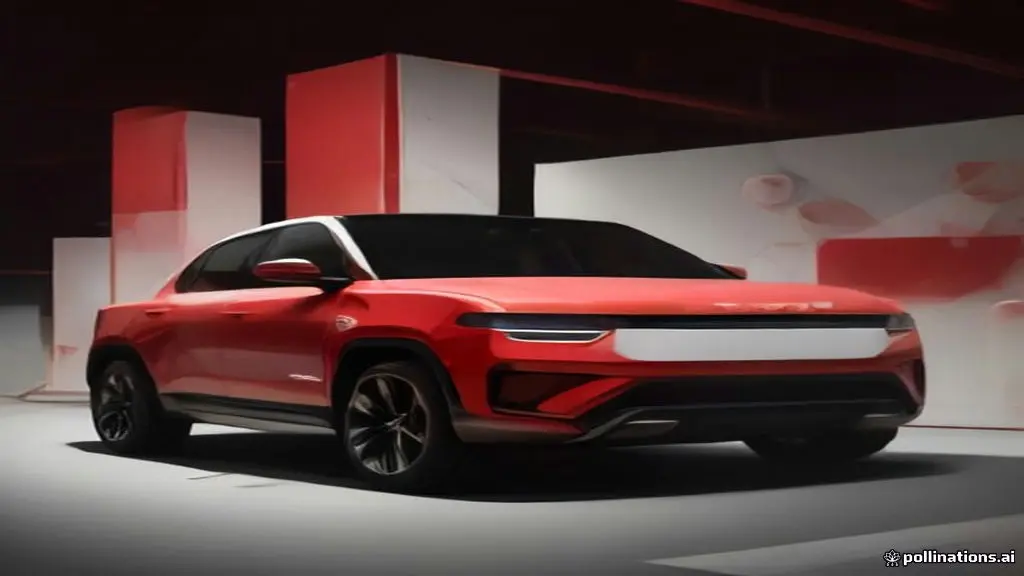
Rivian Integrates Anthropic and OpenAI AI Agents Into Its Electric Vehicles
By Ali Al-Montaser — Senior AI Technical Editor
Rivian CEO RJ Scaringe announced at TechCrunch Disrupt that the company will integrate third-party AI agents from Anthropic, OpenAI, and Meta into its electric vehicles. The system uses a vendor-neutral agentic framework that routes queries between an on-edge local model and cloud-based models, with a strict prohibition on any control over critical safety systems like brakes or steering. Rivian has scheduled its AI & Autonomy Day in December to reveal full details, while the current internal agent has been available since May 2026 with access to external apps like Google Calendar.
Executive Overview
Rivian CEO RJ Scaringe announced at TechCrunch Disrupt that the company will integrate third-party AI agents from Anthropic, OpenAI, and Meta into its electric vehicles, redefining driver-vehicle interaction. The company has scheduled its AI & Autonomy Day in December to reveal full details, noting that the current internal agent has been available since May 2026 and can access external apps like Google Calendar. The system uses a vendor-neutral agentic framework that routes queries between an on-edge local model and cloud-based models, with a strict prohibition on any control over critical safety systems such as brakes or steering.
📊 Official Technical Specifications & Data Sheet
| Technical Aspect | Confirmed Official Data |
|---|---|
| 💰 Pricing & Usage Cost | Rivian has not announced separate pricing for AI agents; the service is integrated into the vehicle ecosystem. For comparison, Anthropic Claude and OpenAI models operate on token-based pricing in their respective APIs. |
| 🌐 Platforms & Immediate Availability | The internal agent is currently available in Rivian vehicles. External agents (Anthropic, OpenAI, Meta) are under development. The framework operates on a hybrid model: an on-edge local model inside the vehicle + cloud-based models. |
| ⚡ Performance & Speed Benchmarks | No official benchmark figures have been published. The system automatically routes between the local model (for simple queries) and the cloud model (for complex queries) to optimize response time. |
| 🛡️ Security & Breach Resistance | Complete separation of critical safety systems: "Any vehicle-level control such as brakes or steering will never be handed over to AI agents" — RJ Scaringe. Integration requires intensive security coordination with AI labs to ensure safety. |
| 🧠 Context Window | The system is designed to pull context from user conversations across multiple devices (e.g., previous conversations with the assistant on the phone) to enable sequential queries such as planning dinner while simultaneously adjusting ventilated seats. |
| 🌍 Arabic Language & Regional Support | No official announcement regarding Arabic language support or Rivian's availability in Middle Eastern markets. The company is currently focused on the U.S. market. Additional language support depends on the integration of external agents and their multilingual capabilities. |
Deep-Dive Features & Architecture
Rivian developed its in-vehicle software from scratch instead of relying on Apple CarPlay or Android Auto, building its own applications such as navigation. The internal agentic framework operates on a "traffic light" principle, as described by Scaringe: when a query is directed to the car, the system automatically decides whether to use a local on-edge model inside the vehicle or escalate the request to the cloud for more complex models. This hybrid design reduces response time for simple queries like adjusting temperature or activating seat heating, while enabling complex questions to be processed via the cloud.
The biggest challenge, according to Scaringe, is not purely technical but relates to "plumbing" — the infrastructure needed to connect the car to external agents. This requires intensive coordination with AI labs to enable this connection, while ensuring that any integration does not touch critical safety systems. Rivian completely rules out handing over any control of brakes or steering to AI agents, placing agents only in an interaction and services layer.
Benchmark & Competitive Performance
Rivian is not the first American car company to integrate AI agents. Tesla preceded it by adding a feature that allows users to talk to SpaceX's Grok robot and the Grok Bot assistant earlier this year. The fundamental difference is that Tesla develops its models internally through xAI, while Rivian adopts a "vendor-neutral" strategy via an internal agentic framework that hosts agents from multiple companies such as Anthropic, OpenAI, and Meta. This approach resembles an "operating system" model for the car, where Rivian becomes a platform hosting various agents instead of tying itself to a single provider. The competitive advantage lies in flexibility and the ability to integrate best-in-class AI without being locked into one vendor.
Industry Impact & Enterprise Adoption
Rivian's move signals a broader trend in the automotive industry: vehicles are becoming platforms for third-party AI services. By opening its software stack to external agents, Rivian positions itself as a neutral hub, potentially attracting partnerships and accelerating innovation. This could pressure other automakers to adopt similar open frameworks, fostering an ecosystem where AI agents from different providers compete on user experience. For enterprises, this means new opportunities to deploy branded AI assistants in vehicles, though security and safety remain paramount. The December AI & Autonomy Day will likely reveal more about Rivian's roadmap and potential enterprise partnerships.
Conclusion
Rivian's plan to integrate AI agents from Anthropic, OpenAI, and Meta into its electric vehicles represents a significant step toward software-defined vehicles. With a vendor-neutral agentic framework and a strict safety-first approach, Rivian aims to redefine in-car AI while keeping critical systems isolated. As the company prepares for its AI & Autonomy Day in December, the industry watches closely to see how this hybrid edge-cloud model performs and whether it sets a new standard for automotive AI integration.
Media Source: TechCrunch AI | Fact Verification & Analysis: AI Tools Oasis
Frequently Asked Questions
RJ Scaringe announced at TechCrunch Disrupt that Rivian plans to integrate AI agents from advanced AI companies, explicitly mentioning Anthropic (Claude), as well as OpenAI (Dots) and Meta (Muse assistant) as potential examples. No specific implementation date was announced; the company referred to its AI & Autonomy Day in December for full details.
No. RJ Scaringe emphatically confirmed that any vehicle-level control, such as applying brakes or steering the car, will never be handed over to AI agents. Agents will be limited to non-critical tasks like adjusting temperature, activating seat heating, and summarizing news, with complete separation from safety systems.
Scaringe described the framework as operating like a traffic light: when a question is directed to the car, the system decides which model to use. It can use a local on-edge model inside the vehicle for simple questions, or move to the cloud for more complex ones. Rivian developed this framework from scratch instead of relying on Apple CarPlay or Android Auto.
Rivian has not set an official availability date. The company referred to its AI & Autonomy Day scheduled for December 2026, where full details will be revealed. So far, the internal agent is available and has had access to external apps like Google Calendar since May 2026.
No. Tesla preceded it by adding a feature that allows users to talk to SpaceX's Grok robot and the Grok Bot assistant earlier this year. However, Rivian stands out with its approach based on a from-scratch internal agentic framework that allows integration of agents from multiple companies such as Anthropic, OpenAI, and Meta.

AI Tools Oasis Team
Bringing you the latest news and analysis in the world of Artificial Intelligence with accuracy and credibility. Follow us for all updates.

