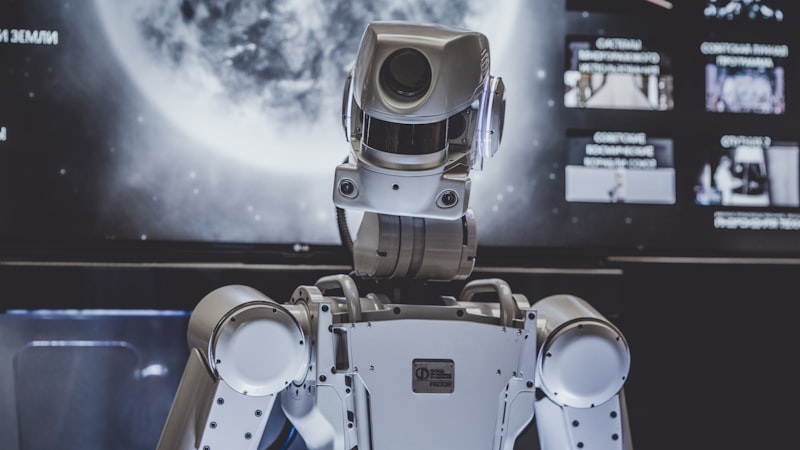
Qualcomm announces a strategic partnership with Neura Robotics to integrate advanced on-device AI into industrial and commercial robots. This collaboration aims to create autonomous, learning-capable machines for manufacturing, healthcare, and logistics. The move signals a major shift towards cognitive robotics and positions Qualcomm against NVIDIA and Intel in the AI processor market.
In a proactive move to shape the future of artificial intelligence in the physical world, chip giant Qualcomm has announced a strategic collaboration with German robotics startup Neura Robotics. This announcement comes at a time when the robotics industry is experiencing unprecedented acceleration, driven by massive advances in machine learning algorithms and edge processing capabilities. The partnership aims to bridge the gap between advanced AI data processing and the real-world sensory interaction provided by robots. Industry analysts believe this collaboration is not merely a passing technical agreement but a cornerstone for building a new ecosystem of intelligent, autonomous machines capable of operating in complex, dynamic environments. This alliance highlights a broader industrial trend where major tech companies seek to translate their software supremacy into dominance in hardware and physical systems.
The partnership primarily focuses on integrating the AI-powered Qualcomm Robotics Platform into Neura Robotics' machines. Neura's robots, known for their advanced mechanical designs and precise sensors, will benefit from the superior processing power of Qualcomm's chips, specifically engineered to run complex AI models directly on the device (On-Device AI). This means robots will be able to make instantaneous decisions without complete reliance on cloud connectivity, significantly enhancing their speed, reliability, and data privacy. The integration promises to move robotics beyond pre-programmed sequences towards adaptive, intelligent behavior.
The technologies to be integrated into this partnership include:
This partnership represents a qualitative leap in robotics design philosophy. Instead of being mere pre-programmed mechanical arms, the next generation of robots will become autonomous perceptual systems capable of adapting to unexpected tasks and learning from their interactions. This has enormous implications for sectors like smart manufacturing, where robots could reconfigure themselves for new production lines, and assistive healthcare, where they could provide more intelligent support for patients and the elderly. It also opens doors for applications in predictive maintenance for industrial facilities, precision agriculture, and logistics within smart warehouses.
From a competitive standpoint, Qualcomm is positioning itself in direct competition with other players like NVIDIA and Intel in the market for AI processors in robotics. Qualcomm's strategy hinges on energy efficiency and performance at the edge, which aligns perfectly with the requirements of mobile robots that need to operate for extended periods. The success of this alliance could redraw the competitive map in the rapidly growing industrial and commercial robotics market.
The main goal is to develop a new generation of Cognitive Robots that combine advanced motor skills with human-like intelligent capabilities in perception and decision-making. The two companies aim to create robots that can be easily deployed in unstructured environments and quickly learn new tasks through interaction or demonstration.
Sectors like manufacturing and industrial assembly are expected to see the first fruits of this partnership, followed by logistics and smart warehousing. In the medium term, we may see applications in social interaction (e.g., receptionist robots) and assistance with complex domestic tasks.
On-Device AI enables faster response times, enhanced operational reliability in connectivity-limited environments, and improved data security and privacy by processing sensitive information locally. This is critical for real-time applications like collision avoidance and immediate task adjustment.
Key challenges include the complexity of integrating sophisticated AI hardware with precise mechanical systems, ensuring robust safety protocols for autonomous learning machines, and managing the high development costs associated with cutting-edge cognitive robotics. The partnership will also need to demonstrate clear ROI to accelerate industry adoption.
The strategic partnership between Qualcomm and Neura Robotics marks a significant milestone in the evolution of intelligent machines. By fusing leading-edge semiconductor AI with sophisticated robotic platforms, this collaboration is poised to unlock new levels of autonomy, adaptability, and practical utility for robots across critical industries. While technical and market challenges remain, this alliance underscores a definitive shift from automated tools to truly cognitive partners in the workforce. The progress here will likely set the benchmark for the next decade of innovation in robotics and embodied AI.
Source: TechCrunch AI | Analysis & Editorial: AI Tools Oasis

Bringing you the latest news and analysis in the world of Artificial Intelligence with accuracy and credibility. Follow us for all updates.

OpenAI is advancing its ambitious super app project, aiming to integrate advanced AI capabilities into a single, multifunctional platform. This development is part of the company's strategy to expand services and deliver a unified user experience. Discover the full details and expected impact of this move.

Notion has restored access to its Anthropic AI integration after a 4-hour outage disrupted users relying on Claude-powered features. The incident highlights the growing dependency on AI productivity tools and raises questions about infrastructure stability. All user data remained secure during the disruption.

A new report from TechCrunch AI warns of a potential 'Tokenpocalypse'—a massive collapse of digital tokens due to oversupply. With over 80% of new tokens losing 90% of their value, the market faces a crisis reminiscent of the dot-com bubble. This analysis explores the risks, impacts, and how investors can protect themselves.
