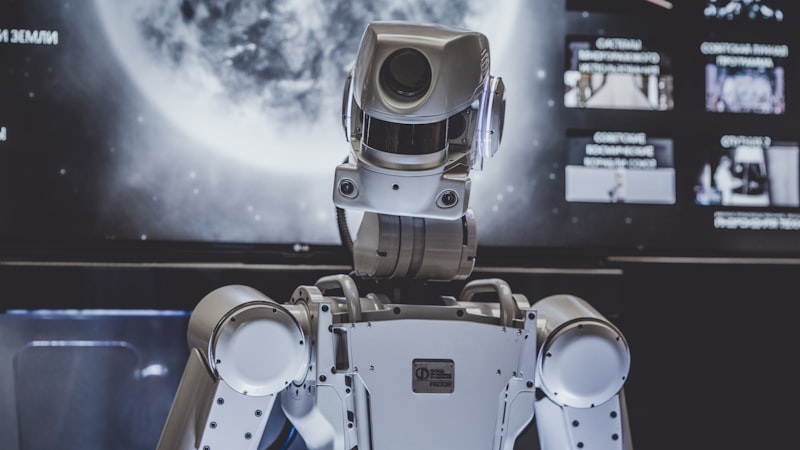
Physical Intelligence, led by Stripe veteran Lachy Groom, launches with major funding to develop foundational AI 'brains' for physical robots. The startup aims to bridge the gap between theoretical AI and machines' ability to interact with the physical world. This ambitious project is positioned to become the potential operating system for next-generation robotics.
In a move that redefines the boundaries of applied artificial intelligence, Physical Intelligence emerges as one of Silicon Valley's most compelling new ventures. Leading this ambitious initiative is Lachy Groom, a veteran of the financial tech giant Stripe, who is now channeling his expertise in building complex technical platforms toward a greater challenge: endowing robots with minds capable of understanding and intelligently interacting with the physical world. The project's core mission isn't to manufacture new robotic arms or metal frames, but to develop the fundamental software and algorithms that will form the "brain" for these machines. This represents a qualitative leap from pre-programmed robots to machines capable of genuine learning and adaptation in real-world environments.
Physical Intelligence was founded on a central premise: while current AI has made staggering advances in language processing and computer vision, it remains significantly limited when it comes to interacting with the physical world. The company's mission is to bridge this gap by developing core AI platforms specifically engineered to control physical bodies and robots. Groom brings a sterling reputation and deep expertise in tech scaling to the project, granting it immediate credibility and attracting substantial initial investment from major Silicon Valley backers eager to bet on the next generation of artificial intelligence. This focus positions the startup not as a hardware competitor, but as a potential essential software provider for the robotics ecosystem.
The company's work focuses on a suite of formidable technical challenges, including:
The emergence of Physical Intelligence comes at a time of fundamental transformation in the robotics industry. While mechanical components and sensors have become more sophisticated and affordable, software and intelligence have remained the primary bottleneck. Groom's project isn't trying to compete with companies like Boston Dynamics in building dynamic hardware; instead, it aims to become the primary intelligence supplier for those platforms and many other robots. This foundational software (platform) model has a successful precedent in the tech world, as seen with mobile operating systems or cloud infrastructure. If successful, Physical Intelligence could become the standard operating system for robotic minds, creating a massive market and stimulating a wave of innovation across industries reliant on physical automation.
Traditional AI, such as large language models, focuses on understanding and generating text, images, or digital data. Physical Intelligence (or Embodied AI) is a specialized branch aimed at enabling a machine to understand physical laws (like gravity, friction, mass) and make sequential, complex decisions to control and move a physical body in the real world to achieve a practical goal, such as assembling a component or opening a door.
Lachy Groom is a well-known tech entrepreneur and investor. He was an early employee at Stripe, where he played a central role in its growth into one of the world's most important electronic payment companies. After leaving Stripe, he became an active investor supporting numerous promising startups. His experience in building and scaling complex technical platforms is what he now leverages to lead the Physical Intelligence project.
The potential applications are vast and diverse, including:
The company's stated strategy is to act as an enabling layer, not a competitor. By providing the core AI "brain" as a platform or service, they aim to partner with hardware manufacturers (like those building robotic arms, mobile bases, or specialized drones) and system integrators. This would allow these partners to focus on their mechanical and domain expertise while leveraging Physical Intelligence's advanced software for perception, planning, and control, significantly accelerating development cycles.
The primary challenges involve creating AI that can handle the immense complexity, uncertainty, and real-time demands of the physical world. Key hurdles include:
Physical Intelligence represents a bold and strategically significant bet on the future of automation. By targeting the core software intelligence layer for robotics, Lachy Groom and his team are addressing what many see as the final, most difficult frontier for AI: seamless interaction with the messy, unpredictable physical world. While the technical challenges are profound, the potential payoff—a universal "brain" for robots—could unlock a new era of intelligent machines. The significant early funding and industry attention underscore the belief that solving embodied intelligence is not just another niche in AI, but a foundational capability that will power the next wave of technological transformation across the global economy.
Source: TechCrunch AI | Analysis & Editorial: AI Tools Oasis

Bringing you the latest news and analysis in the world of Artificial Intelligence with accuracy and credibility. Follow us for all updates.

OpenAI is advancing its ambitious super app project, aiming to integrate advanced AI capabilities into a single, multifunctional platform. This development is part of the company's strategy to expand services and deliver a unified user experience. Discover the full details and expected impact of this move.

Notion has restored access to its Anthropic AI integration after a 4-hour outage disrupted users relying on Claude-powered features. The incident highlights the growing dependency on AI productivity tools and raises questions about infrastructure stability. All user data remained secure during the disruption.

A new report from TechCrunch AI warns of a potential 'Tokenpocalypse'—a massive collapse of digital tokens due to oversupply. With over 80% of new tokens losing 90% of their value, the market faces a crisis reminiscent of the dot-com bubble. This analysis explores the risks, impacts, and how investors can protect themselves.
