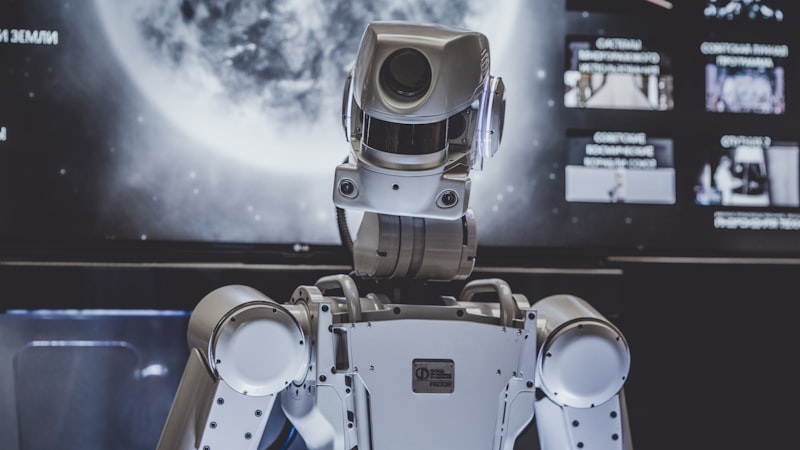
OpenAI's groundbreaking Sora video generation model, which captivated the AI world at launch, is reportedly encountering significant technical and performance challenges. Issues with output consistency, computational demands, and scaling are raising questions about its path to commercial viability. These developments highlight the complex realities of advanced generative AI development.
The artificial intelligence landscape was electrified by the dazzling launch of OpenAI's Sora, a model promising to revolutionize text-to-video generation with its advanced capabilities. However, shortly after this wave of media and technical excitement, reports are emerging indicating the application is facing significant difficulties and challenges that could hinder its journey toward dominance in this promising sector. These developments raise fundamental questions about the sustainability of advanced visual models and their ability to meet high expectations in a rapidly accelerating competitive environment. In this report, we detail these challenges and analyze their potential impact on the future of the application and the broader AI tools market.
According to specialized sources, the challenges facing Sora are not limited to one aspect but extend to several vital areas. The first of these concerns the model's technical and performance capabilities, with some reports pointing to limitations in the quality and accuracy of outputs in complex scenarios or when attempting to generate long, coherent clips. This is surprising given the impressive demonstrations that accompanied the initial launch.
Furthermore, analyses suggest the application may face challenges regarding the computational resources required to run it efficiently. Generating high-quality video demands immense processing power, which could limit its widespread availability or increase the cost of use for companies and individuals. Additionally, there are questions about OpenAI's infrastructure's ability to support a model of this complexity as the number of users and demands increases.
The emergence of challenges for the Sora application at an early stage has significant implications for the AI video generation tools market. First, it confirms that developing generative AI models, especially in the complex visual domain, is a gradual process full of obstacles, even for major players like OpenAI. Second, it opens the field for competitors, such as Runway, Stability AI, and others, to close the gap or offer alternative solutions that may be more stable or efficient in certain aspects.
Strategically, OpenAI may be forced to redirect some resources toward improving and stabilizing the current Sora model before expanding into new features. This could slow the pace of announced innovation but is necessary to build long-term trust with developers and end-users. The bigger question remains how these technical obstacles will affect the timeline for integrating Sora's technologies into the company's other products or making them widely commercially available.
Reports indicate challenges with long-term scene consistency, difficulties in understanding nuanced details of complex contexts mentioned in the prompt text, and sometimes a decrease in the realistic quality of outputs compared to the initial launch samples. Computational resource consumption is also reportedly high.
No, they certainly do not mean failure. Most advanced AI models go through stages of refinement and improvement after their initial launch based on real-world feedback. The current challenges are a natural part of the development cycle, especially for an ambitious and innovative product like Sora.
Competitors can focus on the strengths of their own models, such as:
It may mean that the timeline for broad public or commercial access to the application could be delayed slightly while OpenAI works to address these foundational issues. It is wise for users to explore current alternatives while following Sora updates, as the final solution may be more robust after this tuning phase.
The story of OpenAI's Sora application offers an important lesson in the fast-paced world of technology: a dazzling launch is just the beginning of the journey. The technical challenges now surfacing underscore the immense complexity of building reliable, scalable generative video AI. For the market, this moment creates space for competition and diversification, reminding us that no single player holds all the answers. The ultimate success of Sora will depend not just on its groundbreaking potential, but on OpenAI's ability to navigate these practical hurdles, optimize performance, and deliver a tool that meets real-world demands. The race for AI video supremacy continues, but the path forward is proving more demanding than the initial hype suggested.
Source: TechCrunch AI | Analysis & Editorial: AI Tools Oasis

Bringing you the latest news and analysis in the world of Artificial Intelligence with accuracy and credibility. Follow us for all updates.

OpenAI is advancing its ambitious super app project, aiming to integrate advanced AI capabilities into a single, multifunctional platform. This development is part of the company's strategy to expand services and deliver a unified user experience. Discover the full details and expected impact of this move.
Notion has restored access to its Anthropic AI integration after a 4-hour outage disrupted users relying on Claude-powered features. The incident highlights the growing dependency on AI productivity tools and raises questions about infrastructure stability. All user data remained secure during the disruption.
A new report from TechCrunch AI warns of a potential 'Tokenpocalypse'—a massive collapse of digital tokens due to oversupply. With over 80% of new tokens losing 90% of their value, the market faces a crisis reminiscent of the dot-com bubble. This analysis explores the risks, impacts, and how investors can protect themselves.
