
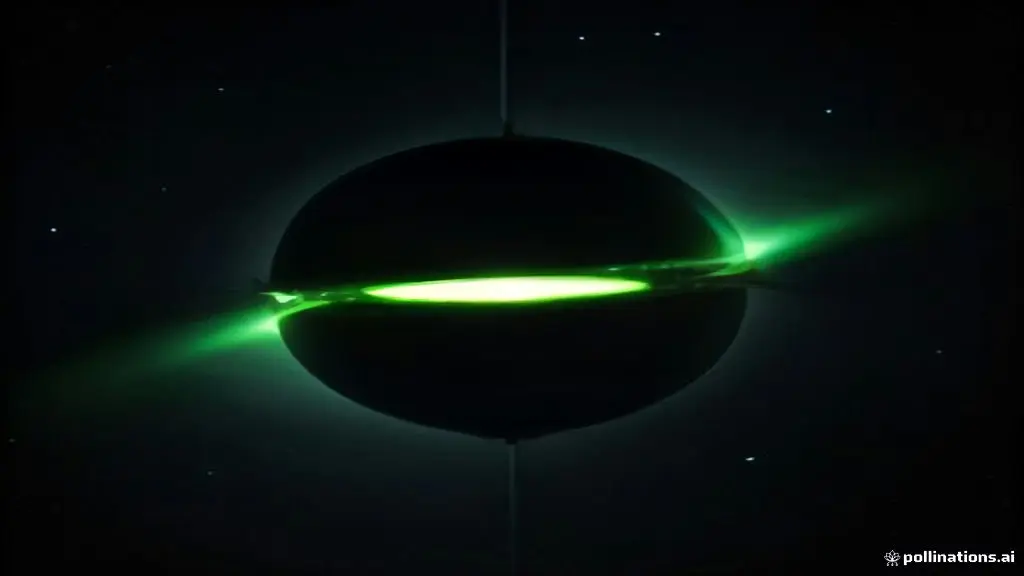
Google's Suncatcher Satellite Runs Gemma 4 and Writes Poetry in Orbit
By Ali Al-Montaser — Senior AI Technical Editor
Google has activated its Suncatcher space data center prototype, launched on a SpaceX Falcon 9 and operational as of October 30, 2026. The satellite carries four TPU chips and a 1 kW power generation capacity, running the open-source Gemma 4 model from Google DeepMind. Due to power constraints, only one TPU can operate for roughly 20 minutes per session, complicating space-to-ground communications. Google plans to launch two additional satellites in 2027 with advanced chips and optical inter-satellite links.
Executive Overview
Google has officially activated its Suncatcher space data center prototype, marking a significant milestone in orbital computing. Launched on a SpaceX Falcon 9 rocket and operational as of October 30, 2026, the satellite carries four TPU chips and a 1 kW power generation capacity, running the open-source Gemma 4 model from Google DeepMind. Due to power constraints, only one TPU can operate for approximately 20 minutes per session, adding complexity to space-to-ground communications. The project aims to deploy clusters of closely orbiting satellites to execute large inference workloads in space, with plans to launch two additional satellites in 2027 featuring advanced chips and optical inter-satellite links.
📊 Official Technical Specifications & Data Sheet
| Technical Aspect | Confirmed Official Data |
|---|---|
| 💰 Pricing & Usage Cost | Gemma 4 is free and open-source via Google AI Studio and Vertex AI; no licensing cost. |
| 🌐 Platforms & Immediate Availability | Gemma 4 is available via Google AI Studio, Google Cloud Vertex AI, Hugging Face, and for local use. |
| ⚡ Performance & Speed Metrics | 1 kW power generation; single TPU operation for 20 minutes per session; radiation and thermal endurance tests ongoing. |
| 🛡️ Security & Breach Resistance | Extensive radiation testing to prevent "bit flips" that could corrupt data without warning. |
| 🧠 Context Window | Context window size not mentioned in the report; refer to official Gemma 4 documentation. |
| 🌍 Arabic Language & Regional Support | Gemma 4 supports multiple languages including Arabic; no regional restrictions on model access. |
Deep-Dive Features & Architecture
After a three-week commissioning process to test subsystems, the satellite received its first text command this week, when engineers asked the Gemma 4 model to write a haiku about space. The model responded with poetic verses, and the team then tested its ability to report on orbital conditions around the satellite. A Google spokesperson confirmed that the satellite is operating normally. The satellite carries four TPU chips, but due to power requirements, only one chip can be operated at a time for approximately 20 minutes, which increases the complexity of space-to-ground communications.
The ongoing test campaign focuses on chip performance under thermal stress and in the space radiation environment. Google has extensively tested TPU chips in particle accelerators on Earth, but now needs to assess real radiation effects in space, which can cause "bit flips" and undetected data corruption. Ground tests indicated that radiation impact would be minimal for inference workloads and more significant for model training, but the team will verify this in reality.
If the TPU chips prove effective, Google will launch two additional satellites in 2027 equipped with advanced chips, supporting higher power generation and optical inter-satellite links. The Suncatcher project is notable for its plans to use high-speed inter-satellite links to support distributed and coherent workloads, unlike SpaceX's space data centers that may orbit at large distances preventing effective processing sharing.
Benchmark & Competitive Performance
According to peer-reviewed analysis, SpaceX may need to fly Starship 1,800 times to achieve the learning-driven cost reductions seen with its previous vehicles. The Suncatcher project relies on the fully reusable Starship, linking its success to SpaceX's development. In contrast, companies like Starcloud and Cowboy Space plan to execute inference workloads on individual satellites, while Suncatcher bets on closely clustered networks.
Industry Impact & Enterprise Adoption
The open-source Gemma 4 model provides an opportunity for Arab developers to build AI applications without licensing costs, with multilingual support including Arabic. However, token efficiency for Arabic texts still requires precise measurement and may need fine-tuning to optimize performance. For startups in the Arab world, orbital inference represents a future opportunity to reduce latency via satellites, but the initial infrastructure cost will remain high until the next decade. Developers can now test Gemma 4 locally via Hugging Face to evaluate its performance on Arabic data before relying on cloud services.
Conclusion
The activation of Suncatcher represents a first step toward scalable space data centers, but technical and economic challenges are significant. Success depends on the performance of TPU chips under radiation and thermal stress, as well as the development of inter-satellite links. Google's initiative underscores the growing interest in space-based AI infrastructure, with potential benefits for latency-sensitive applications and remote connectivity. As the project advances, it will be closely watched by the industry for its technical feasibility and commercial viability.
Media Source: TechCrunch AI | Fact Verification & Analysis: AI Tools Oasis
Frequently Asked Questions
Gemma 4 is open-source and available for free via Google AI Studio and Google Cloud Vertex AI, with no licensing cost.
Yes, Gemma 4 supports multilingual processing including Arabic, but precise token efficiency metrics for Arabic have not yet been published.
It is available through Google AI Studio, Google Cloud Vertex AI, and Hugging Face, and can be downloaded for local use.
The satellite carries four TPU chips, but due to power constraints, only one can operate at a time for about 20 minutes per session.
Two additional satellites are planned for launch in 2027, equipped with advanced chips and optical inter-satellite links.
AI Tools Oasis Team
Bringing you the latest news and analysis in the world of Artificial Intelligence with accuracy and credibility. Follow us for all updates.
