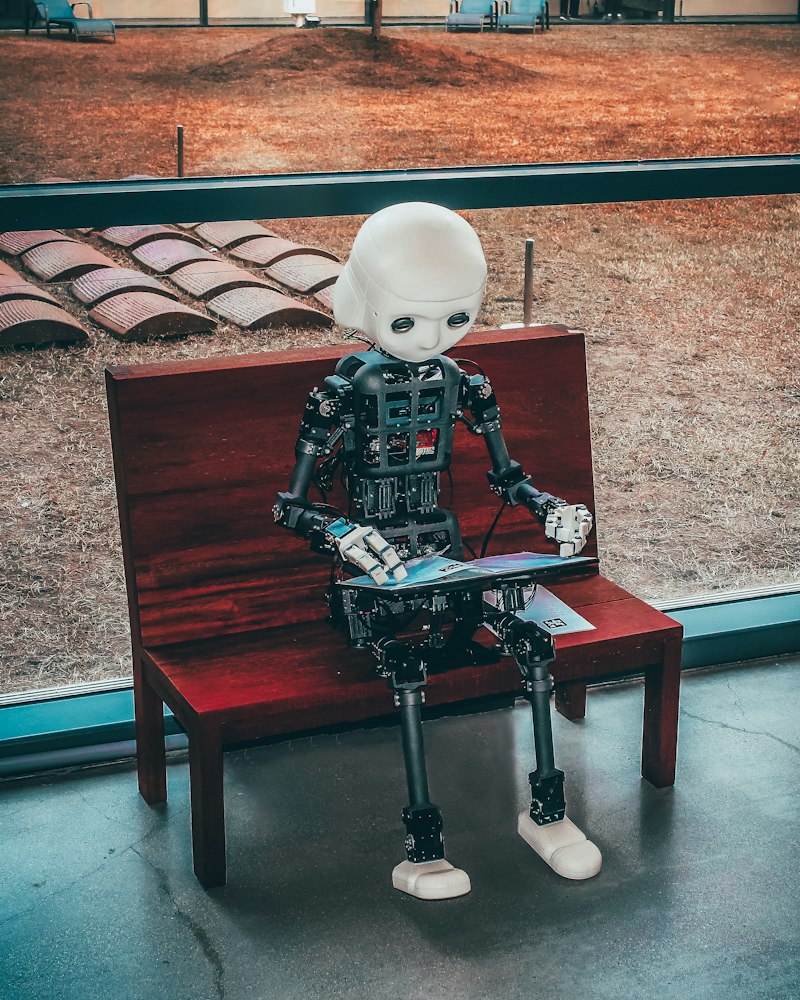
A recent scientific study published on arXiv reveals that algorithms, including advanced AI models, are incapable of achieving true creativity or innovating entirely new functional capabilities. The study mathematically proves that any computational system cannot exceed its pre-programmed parameters, establishing an upper limit for AGI capabilities. These findings raise profound questions about the nature of human intelligence and the future of intelligent technology development.
Amid the astonishing acceleration of artificial intelligence developments, a new scientific study poses a fundamental question: Can machines achieve true general intelligence comparable to human intelligence? The research published under the title "On the Computability of Artificial General Intelligence" carries a surprising answer based on rigorous mathematical proof.
The researchers based their study on a precise definition of artificial general intelligence derived from previous works, defining it as "the ability to create and innovate in a field in a way that opens new horizons and functional capabilities previously unknown in that field." Based on this definition, the team analyzed the limits of algorithmically computable processes.
The core finding of the study is a formal mathematical proof confirming that no algorithm can demonstrate new functional capabilities that did not originally exist in the primary algorithm itself. This means any AI model, regardless of its complexity, cannot surpass the framework it was pre-programmed within. In other words, AI can exhibit existing capabilities, or synthesize and permute those capabilities, but it is fundamentally incapable of inventing something genuinely new in science, engineering, art, sports, or any other field.
This study raises deep philosophical and practical questions. On one hand, it establishes a theoretical ceiling for AI development, suggesting that the ambition to create a truly creative machine may be computationally impossible. On the other hand, it draws attention to the unique nature of human intelligence, which appears capable of transcending these algorithmic limits, prompting questions about the origins and nature of this intelligence, which may not be reducible to mere computational processes.
The study does not deny AI's ability to achieve tremendous and useful accomplishments, but it provides a theoretical framework for understanding what can and cannot be expected from these technologies in the foreseeable future.
Source: arXiv AI Papers | Exclusive coverage from AI Tools Oasis

Bringing you the latest news and analysis in the world of Artificial Intelligence with accuracy and credibility. Follow us for all updates.

OpenAI is advancing its ambitious super app project, aiming to integrate advanced AI capabilities into a single, multifunctional platform. This development is part of the company's strategy to expand services and deliver a unified user experience. Discover the full details and expected impact of this move.

Notion has restored access to its Anthropic AI integration after a 4-hour outage disrupted users relying on Claude-powered features. The incident highlights the growing dependency on AI productivity tools and raises questions about infrastructure stability. All user data remained secure during the disruption.

A new report from TechCrunch AI warns of a potential 'Tokenpocalypse'—a massive collapse of digital tokens due to oversupply. With over 80% of new tokens losing 90% of their value, the market faces a crisis reminiscent of the dot-com bubble. This analysis explores the risks, impacts, and how investors can protect themselves.
