
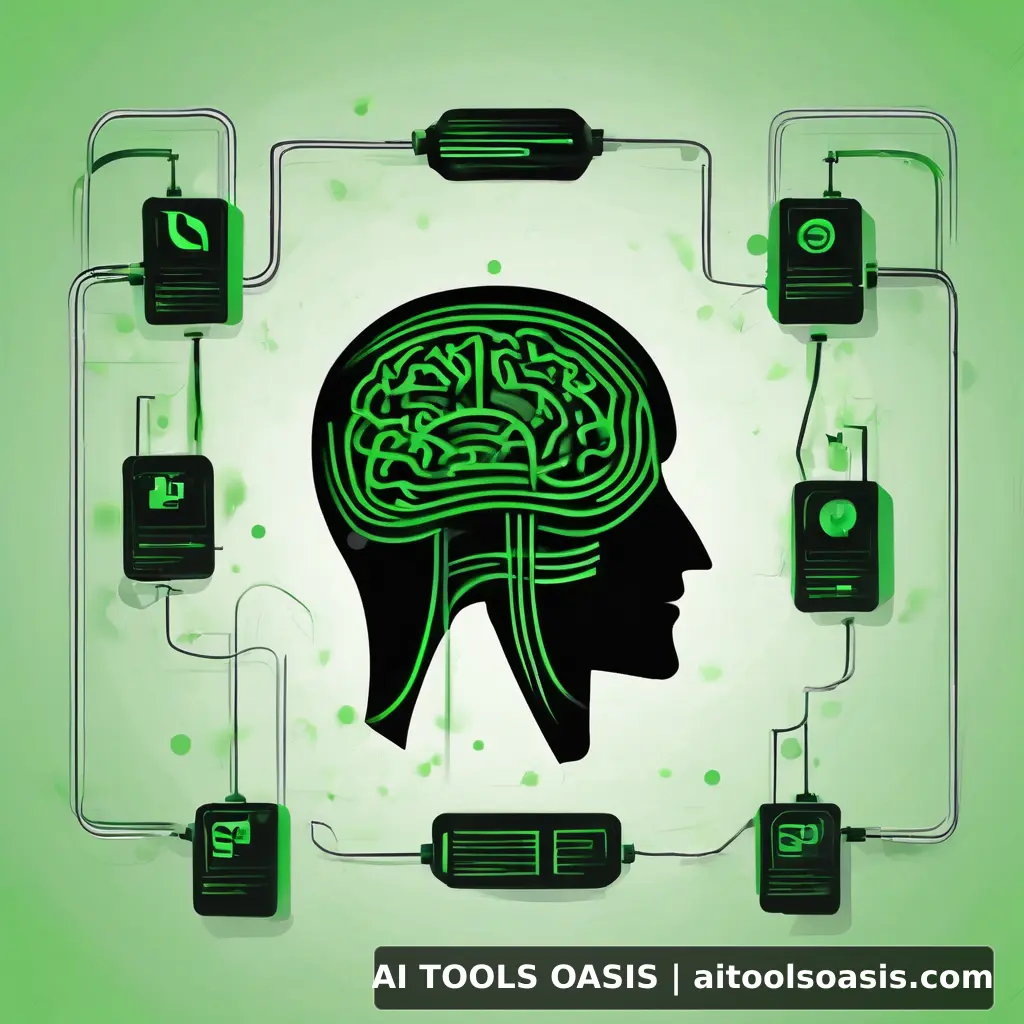
Brain Waves: The Next Key to Physical AI?
By Ali Al-Montaser — Senior AI Technical Editor
Researchers are exploring brain waves as a control interface for physical AI, potentially revolutionizing human-machine interaction. This approach could enable more intuitive control of robots and smart systems, though it remains in early research stages. The technology promises new applications in robotics, prosthetics, and automation, but faces challenges in signal accuracy and ethics.
Introduction
In a rapidly evolving technological landscape, a new question emerges: Could brain waves be the next key to advancing physical artificial intelligence? This inquiry, highlighted by the tech news platform TechCrunch, signals growing interest in merging neuroscience with AI. Physical AI, encompassing robots and intelligent systems capable of interacting with the physical world, could undergo a transformative shift if brain waves are harnessed as an intuitive and rapid control method. The potential to bypass traditional interfaces like keyboards or touchscreens offers a glimpse into a future where thought alone commands machines.
News Details
According to a report published by TechCrunch, researchers are investigating the use of brain waves as a control interface for intelligent systems. The concept involves reading electrical signals generated by the human brain and converting them into commands that machines can understand and execute. This approach could overcome the limitations of conventional control interfaces, enabling more natural and seamless interaction.
The report does not specify particular companies, products, or experimental trials, but focuses on the theoretical potential of this technology. Early applications are expected in areas such as assistive robotics, smart prosthetics, and remote control systems. However, significant challenges remain, including the accuracy of reading and interpreting brain signals in real time, as well as the need for advanced hardware and algorithms.
Impact & Analysis
If successful, this technology could revolutionize how humans interact with machines. Imagine controlling a robotic arm or driving an autonomous vehicle simply by thinking about it. This would enhance the efficiency of intelligent systems and make them more accessible, particularly for individuals with motor disabilities. Integrating brain waves with physical AI could also open doors to new applications in medicine, industry, and entertainment.
On the other hand, ethical and technical challenges must be addressed, including privacy and security of brain data, interpretation accuracy, and development costs. The technology is still in its early stages and may take years before it is ready for widespread commercial use. As research progresses, it will be crucial to balance innovation with responsible deployment.
Conclusion
In conclusion, the question of whether brain waves can serve as a key to advancing physical AI remains open, but it represents a promising research direction. With continued studies and experiments, we may soon see practical applications that change how we interact with technology. The outcome depends on overcoming technical and ethical hurdles, as well as societal readiness to embrace these innovations.
Source: TechCrunch AI | Analysis & Editorial: AI Tools Oasis
Frequently Asked Questions
Brain waves are electrical signals produced by neural activity in the brain. They can be used as a control interface for intelligent systems by reading these signals and converting them into digital commands, allowing control of machines through thought alone.
Physical AI is a branch of artificial intelligence focused on developing intelligent systems capable of interacting with the physical world, such as robots, autonomous vehicles, and smart devices.
No, the technology is still in early research stages. Sources have not mentioned any ready commercial products or applications, and it is expected to take years before it becomes widely available.
Key challenges include the accuracy of reading and interpreting brain signals in real time, privacy and data security issues, high development costs, and the need for advanced hardware.
Arab users can benefit by following developments in this field, learning the basics of brain-computer interfaces and AI, and considering local applications such as assistive systems for people with disabilities or smart home control.

AI Tools Oasis Team
Bringing you the latest news and analysis in the world of Artificial Intelligence with accuracy and credibility. Follow us for all updates.

