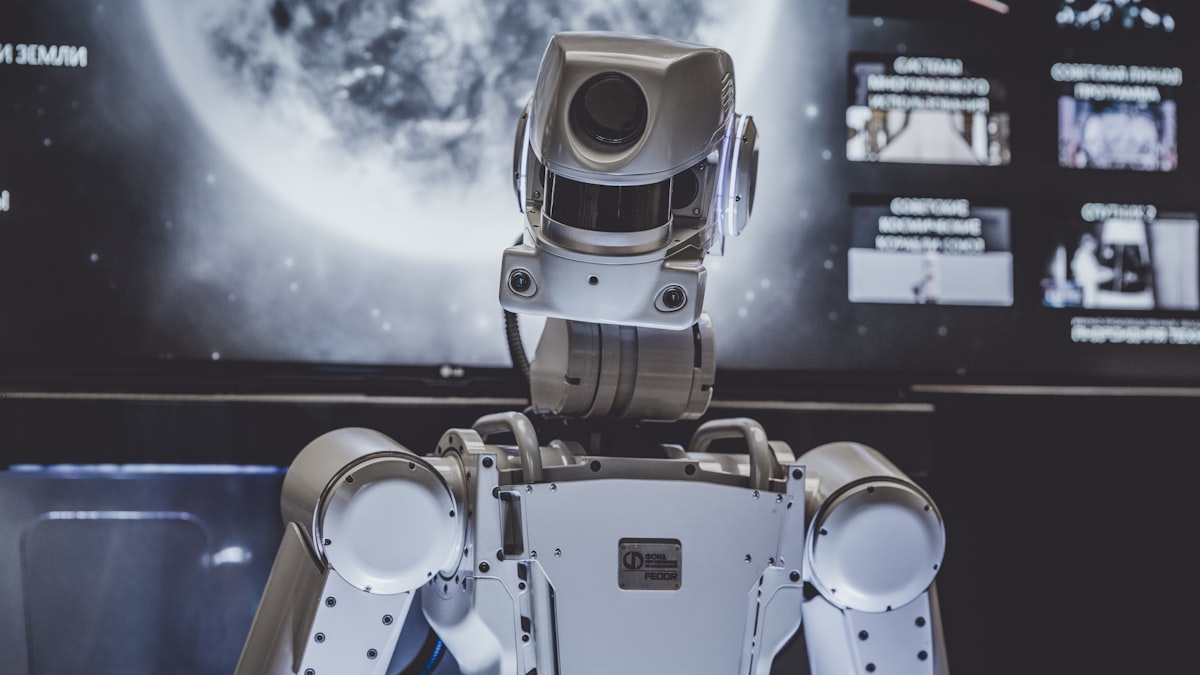
In a recent interview, Cognition CEO Scott Wu asserts that AI coding agents are designed to assist, not replace, human programmers. He emphasizes collaboration over automation, highlighting how tools like Devin boost productivity while keeping developers in control. This balanced perspective offers reassurance amid fears of job displacement in tech.
As the tech industry experiences a surge in the adoption of AI coding agents, Cognition CEO Scott Wu steps forward to clarify their role. In an exclusive interview with TechCrunch AI, Wu stressed that AI in programming should be viewed as a powerful assistant that enhances developer capabilities, not as a threat to their careers. This statement arrives amid growing concerns about machines replacing humans, sparking a broader conversation about the future of work in software development. Wu’s vision promotes a collaborative future where human creativity and AI efficiency coexist, rather than compete.
Scott Wu, founder of Cognition—the company behind the Devin tool—explained that AI coding agents are built to help programmers handle repetitive and complex tasks more efficiently, not to take their jobs. He emphasized that these tools perform best under human supervision, allowing developers to focus on creative problem-solving and high-level design.
Wu added that his company prioritizes developing solutions that boost programmer productivity rather than fully automating their roles. He noted that widespread AI adoption in coding will create new opportunities for developers to upskill and work on more ambitious projects. He firmly believes that human-machine collaboration is the true future of the software industry, where each side leverages its strengths.
Wu’s comments reflect a shift in the dominant narrative around AI. Leading tech companies are beginning to recognize that full replacement of humans is neither realistic nor desirable. Instead, the focus is on AI-human integration to maximize the benefits of both. This stance could ease programmers’ fears about job loss and encourage wider adoption of AI tools in enterprises.
At the same time, this perspective raises important questions about how the programmer’s role will evolve in the age of AI. As tools become more capable of writing code, developers will transition from being code writers to supervisors and strategic planners. This shift demands new skills in overseeing AI systems and analyzing their outputs, ultimately redefining what it means to be a programmer.
No. According to Scott Wu and other experts, AI in programming is intended to augment human abilities, not replace them. Creative tasks and complex problem-solving remain uniquely human, while AI handles repetitive and routine work.
Devin is an AI coding agent developed by Cognition, designed to assist programmers with writing code, debugging, and managing software projects. It acts as an intelligent assistant that can understand code instructions and perform tasks autonomously under human guidance.
Programmers need to develop new skills such as overseeing AI systems, analyzing their outputs, and focusing on creative and strategic aspects of coding. Learning to use AI tools effectively to boost productivity is also highly recommended.
It is unlikely that programming jobs will vanish entirely, but they will evolve. The role will shift from manual code writing to supervising and directing AI systems, requiring stronger analytical and managerial skills. Demand for skilled programmers will persist, but with new requirements.
Benefits include increased productivity, reduced coding errors, faster development cycles, enabling programmers to focus on creative tasks, and overall improvement in software quality. These tools also cut down time spent on repetitive tasks.
Scott Wu’s statements offer a balanced outlook on the future of AI-powered programming, emphasizing collaboration over replacement. This perspective builds confidence in programmers’ ability to adapt to technological changes and encourages the adoption of AI as a powerful ally. Ultimately, human creativity and innovation remain the driving forces in software development, with AI serving as a tool to amplify these capabilities.
Source: TechCrunch AI | Analysis & Editorial: AI Tools Oasis

Bringing you the latest news and analysis in the world of Artificial Intelligence with accuracy and credibility. Follow us for all updates.

OpenAI is advancing its ambitious super app project, aiming to integrate advanced AI capabilities into a single, multifunctional platform. This development is part of the company's strategy to expand services and deliver a unified user experience. Discover the full details and expected impact of this move.

Notion has restored access to its Anthropic AI integration after a 4-hour outage disrupted users relying on Claude-powered features. The incident highlights the growing dependency on AI productivity tools and raises questions about infrastructure stability. All user data remained secure during the disruption.

A new report from TechCrunch AI warns of a potential 'Tokenpocalypse'—a massive collapse of digital tokens due to oversupply. With over 80% of new tokens losing 90% of their value, the market faces a crisis reminiscent of the dot-com bubble. This analysis explores the risks, impacts, and how investors can protect themselves.
